




With the rapid global development, the issue of energy consumption has emerged as a pressing concern. People are increasingly compelled to enhance their environmental awareness, leading to the implementation of energy-saving and emission-reduction policies worldwide and a rise in global energy prices. How to effectively reduce energy consumption, improve energy utilization efficiency, and lower carbon dioxide emissions has become an increasingly important focus. Tubular daylighting systems and photovoltaic lighting systems, as innovative energy-saving measures, are gradually gaining attention. Both products utilize sunlight as an energy source, yet many people are unaware of the differences between them. Today, Xinriyuan will guide you in uncovering their true nature.
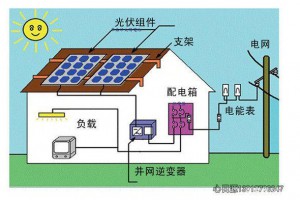
Principle and CompositionTubular Daylighting System (e.g., Solatube): This system efficiently collects outdoor natural light through a dome and directs it into the system for redistribution. The light is then transmitted through specially designed light tubes and evenly diffused into any required area via a diffuser at the bottom. From dawn to dusk, and even on cloudy days, the tubular daylighting system provides ample natural light indoors. Its essence lies in the transmission of natural light.Photovoltaic Lighting System: Solar panels convert solar energy into electricity, which is then managed and protected by a controller. The electricity is stored as chemical energy in batteries. When needed, the batteries convert the chemical energy back into electricity for use by DC or AC loads. The transmitted light remains an artificial source.Common Features Both systems operate independently of the power grid, require no wiring, and are characterized by simple installation, safety, environmental friendliness, and energy efficiency.Advantages and DisadvantagesTubular Daylighting System Advantages:
All components of the tubular daylighting system are recyclable and reusable.
It consumes no electricity during the day while reducing electrical hazards.
The natural light introduced by the system minimizes radiation damage from artificial lighting, protecting human eyes and skin.
The system does not suffer from light degradation issues associated with electric lights and allows for adjustable light intensity using regulators.
It achieves zero emissions during operation, making it environmentally friendly.
The use of tubular daylighting systems serves as a distinctive feature in architecture and a highlight of green building design.
Disadvantages: It cannot capture sufficient natural light for illumination at night. If nighttime lighting is required, additional electric lighting fixtures must be installed.Photovoltaic Lighting System Advantages: It utilizes natural sunlight, reducing electricity consumption, and is not limited by geographical resource distribution, making it suitable for building rooftops.
Disadvantages:
Low energy conversion efficiency: The conversion efficiency of solar photovoltaic cells is approximately 15%–19%. Although silicon solar cells theoretically achieve up to 25% efficiency, actual installation may result in reduced efficiency due to obstructions from surrounding structures.
Short component lifespan: Batteries and controllers are expensive, and batteries are not durable, requiring regular replacement. Controllers typically have a lifespan of only three years.
Low reliability: The system is highly susceptible to external factors such as weather, leading to reduced reliability.
Environmental concerns: Batteries may pose environmental risks, and the manufacturing process of solar panels generates significant pollution.
Both tubular daylighting systems and photovoltaic lighting systems are energy-saving measures promoted by the state and society. However, as evident from the above, tubular daylighting systems can be considered an "evolved version" of photovoltaic lighting systems.
 WhatsApp
 Follow WeChat